Let's chat about the tighter textures...
If you've ever wondered whether your hair is 4A, 4B, or 4C, you're not alone. Understanding your curl pattern is one of the most important steps in building a healthy hair care routine.
While all Type 4 hair falls under the coily or afro-textured category, there are important differences in curl definition, moisture retention, shrinkage, and styling needs.
Important to note that this categorisation exists to simplify the distinction of textures; it is not a perfect science.
In this guide, we'll explain the difference between 4A, 4B, and 4C hair, how to identify your curl pattern, and which products work best for each hair type.
In summary: The Difference Between 4A, 4B and 4C Hair?
Is the shape and tightness of the curl pattern.
| Hair Type | Curl Pattern | Shrinkage | Moisture Needs |
|---|---|---|---|
| 4A Hair | Defined S-shaped coils | High | Moderate to High |
| 4B Hair | Z-shaped bends | Very High | High |
| 4C Hair | Tight coils with little visible definition | Extreme | Very High |
Although curl pattern matters, hair density, porosity, and strand thickness also influence how your hair behaves. Porosity too.
What Is 4A Hair?
4A hair features small, tightly coiled curls with a visible S-shaped pattern.
The curls are generally well-defined and springy, making them easier to identify than other Type 4 textures.
Characteristics of 4A Hair
-
Defined coil pattern
-
High shrinkage
-
Soft texture
-
Benefits from moisture-rich products
-
Responds well to twist-outs and wash-and-go styles
Best Products for 4A Hair
4A hair typically thrives with:
-
Lightweight leave-in conditioners
-
Curl creams
-
Moisturising styling gels
-
Weekly deep conditioning treatments
Browse our Leave-in & Protect Collection to support healthy texture hydration, moisture and definition.
What Is 4B Hair?
4B hair has a less defined curl pattern and forms sharp angles that resemble the letter Z.
Because natural oils struggle to travel down the hair shaft, 4B hair often feels drier than 4A hair.
Characteristics of 4B Hair
-
Z-shaped bends
-
Significant shrinkage
-
Medium to high density
-
Prone to dryness
-
Requires consistent moisture
Best Products for 4B Hair
Look for products containing:
-
Shea butter
-
Coconut oil
-
Castor oil
-
Aloe vera
Cream-based moisturisers and rich leave-ins are often effective for maintaining softness and reducing breakage.
What Is 4C Hair?
4C hair is the tightest curl pattern within the Type 4 category.
The coils are extremely compact and may not show visible curl definition unless moisturised or stretched.
Contrary to popular belief, 4C hair does have a curl pattern—it is simply much tighter than other textures.
Characteristics of 4C Hair
-
Tightest coil pattern
-
Up to 75% shrinkage
-
Highly versatile
-
Most susceptible to dryness
-
Requires regular moisture replenishment
Best Products for 4C Hair
4C hair generally benefits from:
-
Rich deep conditioners
-
Thick leave-in conditioners
-
Butter-based moisturisers
-
Sealing oils
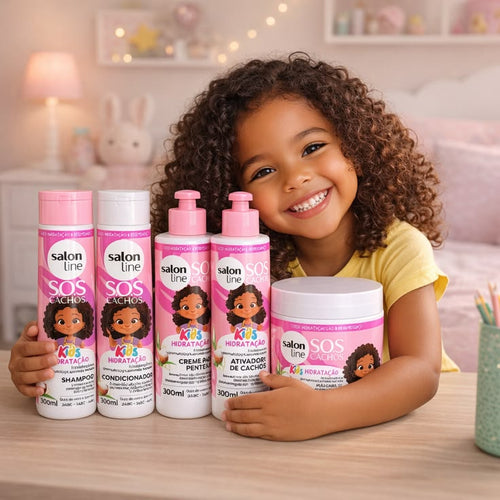
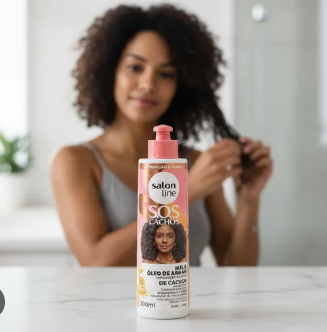
Products from the Salon Line SOS Cachos and Widi Care Mega Cachos ranges are particularly popular among South African women with 4C hair.
Can You Have More Than One Curl Pattern?
100% Yes. This is true for most if not all people.
Many people have multiple curl patterns on their head. It's common to have:
-
4A around the crown
-
4B at the sides
-
4C at the nape
This is completely normal and often influenced by genetics, hair care practices, and environmental factors.
Rather than focusing solely on curl type, it's more important to understand your hair's moisture needs and porosity.
Why Hair Porosity Matters More Than Curl Type
Curl pattern tells you how your hair grows.
Porosity tells you how your hair absorbs and retains moisture.
A person with low-porosity 4C hair may need completely different products from someone with high-porosity 4C hair.
Signs of low porosity:
-
Water beads on the hair
-
Products sit on the surface
-
Hair takes a long time to dry
Signs of high porosity:
-
Hair absorbs water quickly
-
Hair dries quickly
-
Frizz appears easily
Understanding both curl type and porosity creates a much more effective hair care routine.
Recommended Routine for 4A, 4B and 4C Hair
Step 1: Cleanse
Use a sulphate-free shampoo or cleansing conditioner.
Step 2: Deep Condition
Deep condition weekly to restore moisture and elasticity.
Step 3: Apply Leave-In Conditioner
Choose a leave-in that matches your hair density and moisture needs.
Step 4: Moisturise and Seal
Apply a cream-based moisturiser followed by a lightweight oil.
Step 5: Protective Styling
Styles such as twists, braids, and bantu knots help minimise manipulation and moisture loss.
Frequently Asked Questions
Is 4C hair harder to grow?
No. 4C hair grows at the same rate as other hair types. However, shrinkage and breakage can make growth less noticeable.
Can my curl pattern change?
Yes. Heat damage, hormonal changes, chemical treatments, and improved hair health can affect how your curls appear.
Which hair type needs the most moisture?
Generally, 4C hair requires the most frequent moisture replenishment due to its tightly coiled structure.
Final Thoughts
The difference between 4A, 4B, and 4C hair comes down to curl shape, shrinkage, and moisture requirements. While understanding your curl pattern is useful, building a routine based on your hair's unique needs will always deliver the best results.
Whether you have defined 4A coils, a 4B zig-zag pattern, or tightly coiled 4C hair, the key to healthy hair is consistent cleansing, conditioning, and moisture retention.
Not sure which products are right for your curls?
Take the Naturally Hair Quiz and get personalised recommendations based on your curl pattern, porosity, and hair goals.